Friday, April 12, 2013

Math Strategies

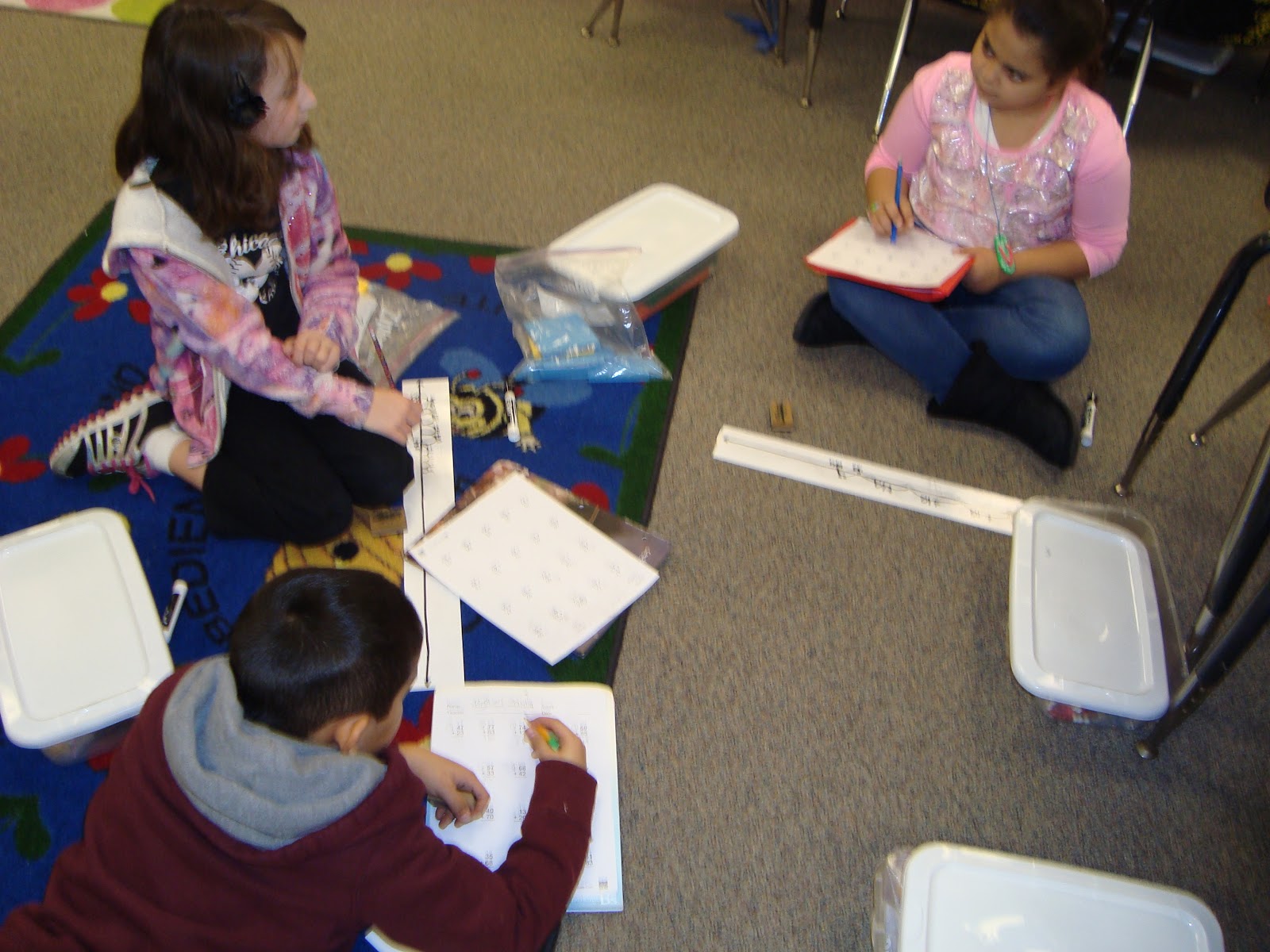
The students are become true 'MATHEMATICIANS' by using a variety of different tools to solve double digit addition and subtraction. Some of these strategies include: Number Line, Bead Strings, Mental Math, Ten Frames, Base Ten Blocks, and Decomposing. According to the Common Core State Standards, students will not start using the 'standard' method of solving 2-digit problems until 4th Grade, so we are trying to acquaint them with all of the other/different ways they can solve these problems. This way, they will truly understand what they are doing when it comes time to 'borrow' or 'regroup' using the standard method.
 
Here is a letter that went home with parents regarding the Common Core Standards and our math curriculum:


2nd Grade Math News!
Attention Parents!


There have been many changes in math this year with the new Common Core Learning Standards. 48 of the 50 states have agreed to adopt these new standards and schools across the country are starting to implement them this year. These standards are researched based and believed to help students become better prepared for college and their future careers. These standards will help students gain the problem solving skills and number sense they will need throughout their lives instead of just learning rote skills and facts.  Students will gain a better knowledge of place value which will help them become more proficient with mental math. 


One of the biggest goals with the new Common Core Learning Standards (CCLS) is to help students express their thinking and explain their work.  The strategies that we have been using in class, such as number lines and decomposing, are examples of ways that students can show their work. These strategies are laying the ground work for better understanding of place value, number sense, and problem solving.  Students are able to use these strategies mentally to solve problems more and more as they progress in grade levels. 


Students have brought up using the “borrowing” and “carrying” method (which is probably the way that we all learned to subtract and add).  That is not the way that addition and subtraction will be taught in 2nd grade according the new national CCLS.  Students will learn the standard algorithm (borrowing method) in 4th grade.  Research shows that 4th grade is the time that is developmentally appropriate for students to learn the algorithm because they should have very strong background knowledge of place value and base-ten by this time.  They will also understand the process as opposed to learning the “borrowing trick”.  It has been shown through research that students that learn standard algorithms too early will struggle in math because their problem solving skills are not as strong.


It is very important that students practice the strategies that are being taught in class at home as well.  That is why I am asking that all homework (besides basic fact practice) will show one of the strategies that we have used in class that are based on the CCLS. 


These strategies include:

·        Using a number line

·        Decomposing

·        Ten Frames

·        Base Ten Blocks

·        Drawing a picture/Tallies

·        Bead Strings

·        Counters (Cereal, beans, etc)

·        Mental

·        Writing an explanation of the process


The students seem very excited about the “new math” that we are learning! They have a Math ‘Toolbox’ that they use in class that contain the tools they need to use these strategies in class. I would be happy to share any resources with you to help your child at home. If you I hope that we can continue to work together as partners in your child’s education and help them to develop these extremely important math skills that will help them throughout their lives. I will continue to send home information about the strategies we are learning in class and I encourage you to also have your child explain what they are doing. We spend a lot of instruction time explaining our work and ‘mathematical’ thinking and this would be a great way to practice this extremely important skill at home!
 
 
_________________________________________________
 
Here are a few pictures of the students using these different methods of solving addition/subtraction problems:

Ten Frames:


Base Ten Blocks:
 
Number Line:

 
Decomposing:


Mental Math:


Friday, March 1, 2013

Hibernation Day

We wrapped up our unit on Cold Weather Animals with a fun-filled day of hibernation! The students came to school dressed in their furriest clothing, brought healthy snacks to eat all day long (to make sure they could store enough food & have energy for the long winter hibernation), read books, and we had 'Celebrity Readers' come into the classroom all day long to read to the students while they hibernated in their sleeping bags. This is a special treat for Second Graders and it is a day that they remember for years to come

In the weeks prior, students read about, researched, and learned many new facts about cold-weather animals. Some of these animals included: arctic foxes, snowy owls, polar bears, penguins, seals, whales, lynxes, wolves, and many more. Students worked independently and in groups to gather information, make books, write paragraphs, and view pictures of some these animals. They worked very hard to earn this special day.


Here are a few pictures from the day:


Cold Weather Animals

The students have been researching and learning about cold weather animals. Students read books, researched on Encyclopedia Britannica, and then wrote expository paragraphs to share their information. Here are a couple of the student's paragraphs:


Blue whales

Do you want to learn about blue whales? Well I'm
going to tell you. Whales are the largest mammals on

earth. They are huge mammals. A blue whale breaths

through nostrils called blowholes. Did you now

whales can have up 2 blowholes.Blue whales feast on

tiny shrimp -like animals called krill. Krill are big fish.

A mother blue whale give birth to a calf underwater.

Did you now baby whales are called calf? Wow! That

is all facts about whales!


Dolphins

Do you want to know a few things about dolphins? Well I'll tell you some facts. Dolphins like to play and do tricks. They race through the sea to get away from sharks. Dolphins spin on there tails just for fun. A dolphin uses its
same sound for its whole life. Wow! Now you know a few things about dolphins.


Friday, February 15, 2013

Happy 100th Day

The 100th Day of School was Friday, February 8th. The students celebrated by wearing sunglasses that read 100. They also worked in groups to make chain links of 100. We decorated the room with the colorful links.


Thursday, January 24, 2013

Holiday Fun

Here are a few fun pictures from our holiday party:


The students also made ornaments as gifts to send home to their families. Using an ornament and white paint, they put their hand print around the ornament. Each of their fingers were turned into snowmen that they decorated themselves. We can thank another Second Grade teacher, Mrs. R, for the great craft idea.
 
Here are some of the finished products:


Opinion Writing

The students filled up their 'Warm Fuzzy Jar' by earning compliments from other teachers and by working well with their classmates. Once filled, they used a program on their iPads called Edmodo to vote for their reward. Not only did they vote, they also had write why they thought that reward would be the best, so they had to persuade me with their opinions. Here are some of the students working on their opinion writing:


Winter Problem Solving

Before Winter Break, students worked vigorously on Problem Solving. One strategy they use to solve 2 digit by 2 digit addition/subtraction is the Empty Number Line. The number line allows students to visualize their thinking. For example, when adding 32+24, students will mark 32 as the starting point on their number line. They will then look at the number 24 and decide how many tens and ones they will need to jump to get the sum of the two numbers. The number 24 has 2 tens, so from 32 we would jump 2 'big ten jumps' to get to 52. From the 52, we would jump 4 'tiny 1 jumps' to get to the answer of 56.

Here is an example of a subtraction story problem that was solved using the empty number line:


In a subtraction problem, students must jump back instead of forward on the empty number line. I made a laminated sentence strip and drew an empty number line on it for the students. They use their dry erase markers to solve their problems.